
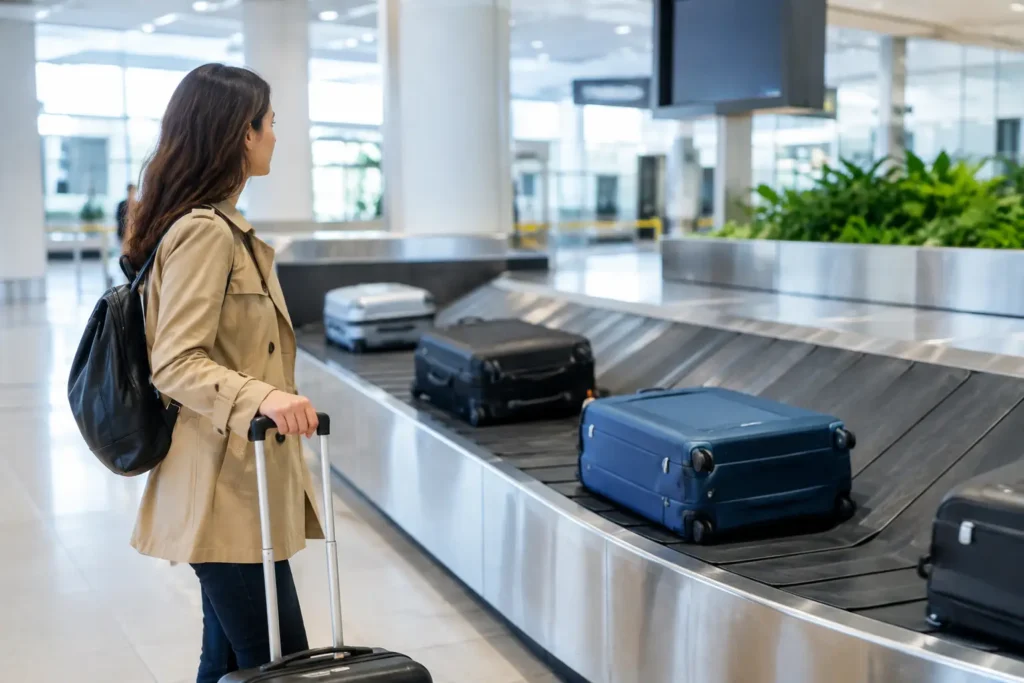
Landing is only the first half of an airport arrival. The airport baggage claim protocol you follow after leaving the aircraft determines whether your exit is calm and coordinated or slowed by missed calls, crowded curbs, and uncertainty about where to go. For travelers arriving at Philadelphia International Airport and other major regional airports, a little planning protects the time and comfort you paid for.
Start the Baggage Claim Process Before You Deplane
As the plane taxis to the gate, turn off airplane mode and check for messages from your airline and your transportation provider. Confirm the arrival terminal, especially when traveling through airports such as PHL, JFK, Newark Liberty International Airport, or Washington Dulles. Terminals, gates, and pickup procedures can change, and a professional chauffeur service should be monitoring your flight in real time as well.
If you checked luggage, look at the airline app or arrival monitors for the assigned carousel. Do not assume the carousel number based on a previous trip. A delayed bag, a gate change, or an aircraft arriving from an international route can alter the normal process.
For international arrivals, baggage claim comes before customs in many cases. Follow the signage and instructions from airport staff rather than trying to leave the secured area early. If you are unsure where to go, ask an airline or airport representative. A two-minute question can prevent a long walk in the wrong direction.
Airport Baggage Claim Protocol, Step by Step
The right approach is straightforward: reach the correct carousel, collect and inspect your belongings, then contact your prearranged chauffeur when you are physically ready to proceed to the designated pickup area. This order matters. Calling when you are still seated on the aircraft or waiting beside the carousel can create unnecessary timing pressure at a busy terminal curb.
Confirm the Carousel and Stay Nearby
Stand where you can see the belt and the display, but leave room for other passengers. Large suitcases often arrive without warning, and crowding the opening makes it harder for everyone to retrieve bags safely.
Keep your baggage claim tags available until every checked item is in hand. They can help airline staff identify a missing bag, confirm ownership, or trace luggage sent to the wrong carousel. If you are traveling with family, agree in advance on who is watching for which bags. That avoids the common moment when everyone is looking at one suitcase while another circles unattended.
Inspect Each Bag Before You Leave
Before heading toward ground transportation, check that you have the right bag and that it is in reasonable condition. Similar black suitcases are easy to mistake, particularly after a late-night arrival. Verify a luggage tag, distinctive ribbon, or name label before you roll away.
If a bag is damaged or missing, address it with the airline before leaving the baggage claim area whenever possible. Take clear photos of damage, retain your boarding pass and claim tags, and obtain a report number. Your chauffeur can wait according to the agreed service plan, but baggage issues are managed by the airline, not the transportation provider.
For travelers carrying valuable equipment, medication, or formalwear for a wedding, meeting, or event, this quick inspection is particularly worthwhile. It is easier to document a problem at the airport than after you have arrived at your hotel, office, or venue.
Move to the Correct Pickup Zone Only When Ready
Airport curbs are controlled spaces, not ordinary parking areas. At PHL, commercial vehicle rules and terminal pickup zones govern where chauffeured vehicles can load passengers. Other airports use designated limo areas, commercial lanes, parking garages, or prearranged pickup zones. The correct location depends on the terminal, airport regulations, and the type of vehicle assigned to your reservation.
Do not direct a chauffeur to stop wherever you happen to exit. A driver may be required to use a specific zone, and stopping outside it can lead to fines, forced movement by airport police, or an unsafe loading situation. Instead, follow the instructions sent with your reservation or contact dispatch once your luggage is collected and you are ready to walk out.
At high-volume airports, your chauffeur may use a cell-phone waiting lot until you confirm you are at the curb. This is not a delay in service. It is the practical way to keep the vehicle close while avoiding prohibited waiting at the terminal. Once you are ready, the chauffeur can proceed to the authorized pickup point.
Why Clear Communication Makes the Difference
A good arrival plan depends on accurate status updates. If your flight is delayed, arrives early, or is reassigned to another terminal, flight monitoring helps a professional transportation team adjust. Still, passengers should communicate if plans change after landing.
Send a message or call when you have collected all checked bags, not just when the plane lands. Include your terminal and the door number or zone marker if visible. If you have a large party, oversized luggage, a car seat, a wheelchair, or multiple bags per traveler, say so. Those details help the chauffeur position the vehicle safely and prepare for efficient loading.
For executive travelers, the value is discretion and time control. A clear handoff from terminal to vehicle means less time searching for a driver and more time preparing for the next meeting. For families and event groups, it means keeping everyone together, getting luggage loaded correctly, and avoiding the stress of splitting into multiple rideshare vehicles at a crowded curb.
Special Considerations for Groups and Important Events
A solo traveler with a carry-on can move from gate to vehicle quickly. A wedding party, corporate team, or family returning from vacation needs a more deliberate plan. The more people and luggage involved, the more important it is to match the vehicle to the actual load.
A 14-passenger Mercedes-Benz Sprinter limousine or shuttle-style vehicle may be ideal for a group, but passenger capacity is not the same as luggage capacity. Formalwear bags, golf clubs, strollers, equipment cases, and oversized suitcases all affect what fits comfortably. Provide an honest luggage count at booking so the appropriate vehicle can be assigned.
If minors are traveling, designate one adult to remain with the group while another handles any airline questions. If travelers are arriving on separate flights, establish a meeting point inside the terminal or arrange separate vehicle timing. Trying to coordinate a full group at the curb without a plan usually creates confusion.
Common Baggage Claim Mistakes to Avoid
Most airport arrival problems come from small assumptions. Travelers assume their bag will appear immediately, assume the driver can wait at any curb, or assume a terminal change does not matter. Major airports are designed around security, traffic flow, and operating rules, so flexibility has limits.
Avoid these four mistakes:
- Leaving the carousel before confirming that every checked bag has arrived or been reported missing.
- Calling for pickup while you are still waiting for luggage, then feeling rushed at the curb.
- Walking to a rideshare or private-vehicle area when your chauffeur has been instructed to use a different commercial pickup zone.
- Booking a vehicle based only on passenger count while overlooking the amount and size of luggage.
The solution is simple: allow a realistic arrival window, keep your phone charged, read pickup instructions, and communicate once you are ready to load. This is especially useful for long-distance airport transfers, where a missed connection at the terminal can affect the entire day.
A More Controlled Arrival at PHL and Beyond
Peters Transit coordinates airport pickups around confirmed reservations, active flight monitoring, terminal logistics, and authorized loading procedures. That approach provides a meaningful difference from hoping a rideshare driver finds the right terminal, has room for your bags, and remains available after a flight delay.
Your role is equally clear: collect your luggage, verify it, and follow the pickup instructions provided for your arrival terminal. Your chauffeur’s role is to be prepared, properly positioned, and ready to help you transition from airport traffic to a comfortable, private ride.
The best airport exits do not feel dramatic. Your bags are accounted for, your vehicle is where it is supposed to be, and the next part of your trip begins without a curbside scramble.