A delayed bag, a crowded arrivals hall, and a chauffeur waiting in the wrong place can turn a well-planned flight into an unnecessarily stressful finish. This baggage claim pickup guide is designed for travelers arriving at Philadelphia International Airport who want the handoff from terminal to vehicle handled with the same care as the trip itself.
For business travelers, families, and groups, baggage claim is not simply the place where luggage appears. It is the point where flight updates, terminal procedures, passenger communication, and ground transportation have to come together. A few clear steps make the difference between waiting curbside with a phone in hand and walking directly into a coordinated pickup.
Start With the Right Pickup Plan
The best airport pickup plan begins before departure. When you reserve chauffeured transportation, provide the airline, flight number, arrival date, passenger name, mobile number, and the number of bags you expect to collect. This gives the transportation team the information needed to monitor your flight and plan the appropriate vehicle access.
Your pickup instructions should also establish one essential detail: how the chauffeur will meet you. At a busy airport, this may be a designated commercial pickup area outside your terminal, a pre-arranged curbside location, or another approved meeting point based on airport rules and traffic conditions. Do not assume a chauffeur can stop directly outside every door or wait indefinitely at the curb. Airports manage commercial vehicles closely, and procedures can vary by terminal, time of day, and security direction.
For a corporate traveler with a carry-on only, the process may be fast. For a family returning from vacation, a wedding party, or a group with skis, golf bags, strollers, or multiple checked cases, it needs more time and more vehicle space. Share those details early. A luxury SUV may suit two executives with light luggage, while a Mercedes-Benz Sprinter or shuttle bus is often the more comfortable and practical choice for a larger party.
What to Do After Landing at PHL
Once your plane arrives, turn off airplane mode and check your phone for a message from your chauffeur or dispatch team. Flight monitoring helps account for early arrivals and delays, but it does not replace passenger communication. The aircraft may arrive at the gate early, baggage may take longer than expected, or you may need extra time assisting a child or fellow traveler.
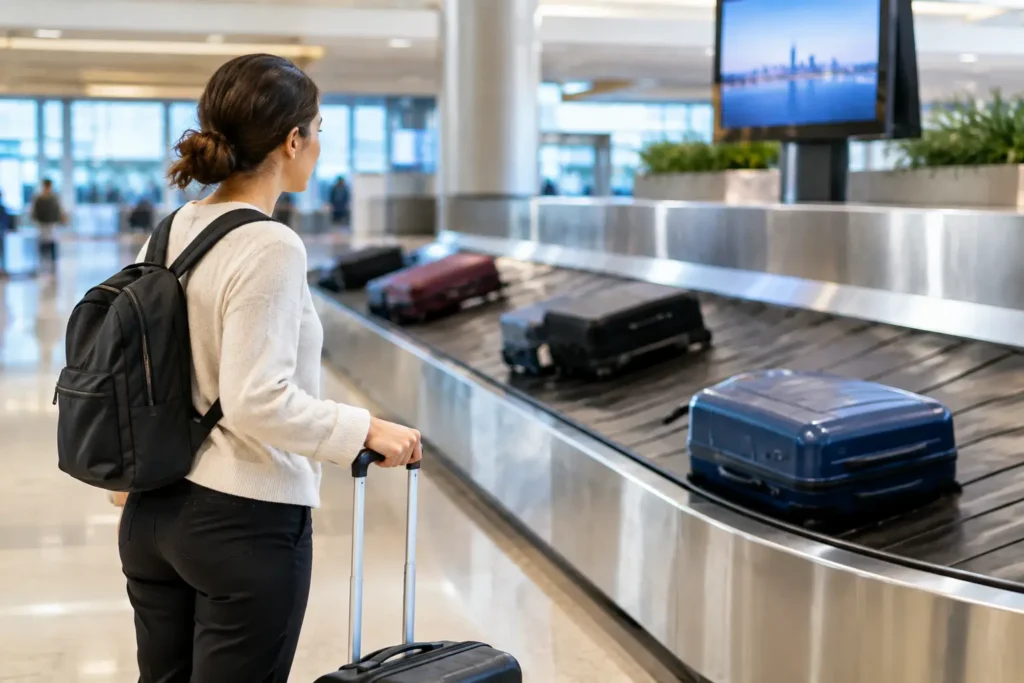
Follow airport signs to baggage claim and confirm the carousel on the overhead display. If your airline changes the carousel, trust the airport screen rather than memory or assumptions. Keep your phone accessible, but stay focused on the bags as they arrive. Lost time at baggage claim often happens because one passenger leaves the carousel while another waits for a suitcase that has already come through.
Before leaving the secured baggage area, confirm that you have every item. Look at bag tags, count your checked pieces, and check for similar-looking luggage. It is much easier to resolve a missing or damaged bag while you are still near the airline baggage service desk than after you have reached the pickup curb.
If a bag is delayed, damaged, or missing, notify your chauffeur or dispatcher immediately. Do not rush outside in hopes that the issue will resolve itself. File the required report with the airline first, then provide a realistic update. A professional transportation team can adjust the pickup sequence when it receives clear information. Silence creates uncertainty; a quick message allows the chauffeur to remain positioned appropriately.
The Best Time to Contact Your Chauffeur
For most checked-bag arrivals, the right time to make contact is when your full party has collected luggage and is ready to exit the terminal. This is especially true at PHL, where curb access and commercial vehicle staging require careful timing.
A simple message works well: “We have all bags and are walking out from Terminal B baggage claim.” If the chauffeur has given you a specific door number or meeting zone, include that confirmation. Wait for the response before crossing lanes or walking to another terminal. Terminal roadways are active, and a few minutes of coordinated waiting is safer than searching through traffic with luggage.
If you are traveling with someone who needs wheelchair assistance, has limited mobility, or requires extra time, say so when you book and again after landing if needed. The proper pickup position may depend on accessible curb space and the passenger’s ability to move comfortably through the terminal.
Know the Difference Between Curbside and Meet-and-Greet
Curbside pickup is efficient when travelers know where to go, have their bags, and can communicate by phone. Your chauffeur coordinates a legal approach to the designated pickup area, pulls up when the party is ready, helps with luggage, and gets you moving without the expense and delay of airport parking.
Meet-and-greet service is different. Depending on the airport, terminal access rules, and the service arranged, a greeter or chauffeur may meet you inside or at an approved interior location with a name sign. This option can be valuable for first-time visitors to Philadelphia, executives with tight schedules, older relatives, families managing several children, or guests arriving for a wedding or special event.
The trade-off is that indoor meeting arrangements require more advance planning and may involve parking, access restrictions, or additional fees. If this level of assistance matters to you, request it at the time of reservation rather than after your flight lands. Your transportation provider can explain what is available for your arrival terminal and date.
Avoid the Most Common Baggage Claim Pickup Mistakes
The first mistake is leaving the baggage area before your entire party is ready. One traveler may have all the suitcases while another is still in a restroom, buying water, or handling an airline issue. Keep the group together until everyone is prepared to walk out.
The second is calling for a vehicle while bags are still on the carousel. At major airports, commercial drivers cannot always wait curbside while passengers finish collecting luggage. Calling only when you are ready helps keep the pickup legal, timely, and calm.
The third is relying on a vague instruction such as “outside arrivals.” Airport terminals have multiple exits, levels, curbs, and traffic lanes. Use the exact terminal, door, zone, or landmark supplied in your confirmation. If you cannot find it, pause in a safe indoor area and call rather than wandering along the roadway.
The fourth is underestimating luggage volume. A party of four with four large checked bags, carry-ons, and personal items can exceed the practical cargo space of some sedans. Booking the correct vehicle protects passenger comfort and avoids a last-minute vehicle change.
Finally, do not treat your return flight pickup the same way as an outbound airport drop-off. Departures are scheduled around a set pickup time. Arrivals depend on the actual gate time, deplaning, baggage delivery, and terminal exit. That is why flight monitoring and live communication matter most on the arrival side.
Picking Up at Newark, JFK, or Dulles
The same principles apply when your trip ends at Newark Liberty International Airport, JFK Airport, or Washington Dulles International Airport, but the exact meeting process may differ. These airports have their own commercial pickup regulations, traffic patterns, terminal layouts, and staging requirements. A pickup instruction that works at PHL may not be permitted at JFK or EWR.
For long-distance airport transfers, avoid booking ground transportation based only on the published flight arrival time. Build in a realistic window for baggage claim, immigration when applicable, and the walk to the approved pickup point. Experienced travelers may move through quickly, but a delayed carousel or international arrival can change the timeline significantly.
Peters Transit coordinates airport pickups with advance reservation details, active flight monitoring, and confirmed passenger communication. That approach is particularly valuable when traveling between Philadelphia, the Main Line, South Jersey, Princeton, and regional airports where a missed handoff can add substantial time to the trip.
A Better Arrival Starts Before You Board
Before your flight departs, save your reservation confirmation, charger, chauffeur contact instructions, and vehicle description where you can reach them without airport Wi-Fi. Keep one traveler responsible for communication if you are in a group. Once you land, collect every bag, send a clear readiness update, and proceed only to the confirmed meeting location.
The goal is not to rush through baggage claim. It is to leave it with every passenger, every suitcase, and a transportation plan that is already working in the background. That is how an airport arrival should feel: organized, comfortable, and ready for whatever is next.