
A 6:30 a.m. flight from PHL, a client lunch in Center City, and an afternoon meeting on the Main Line leave little room for transportation uncertainty. Philadelphia corporate transportation should do more than place a vehicle at the curb. It should account for traffic patterns, terminal procedures, flight changes, luggage, passenger preferences, and the cost of arriving late or distracted.
For executives, assistants, travel coordinators, and visiting clients, a pre-arranged chauffeur service turns ground travel into a managed part of the business day. The difference is not just a luxury vehicle. It is knowing who is driving, where the pickup will happen, what the price includes, and who is accountable if the schedule changes.
What Corporate Travel Requires Beyond a Ride
Business transportation is often booked around a moment that cannot be repeated: a board presentation, a closing dinner, an investor meeting, or a flight connection. A rideshare app may be useful for casual travel, but it is not designed to provide the same level of planning, consistency, or passenger support required for an executive itinerary.
A professional corporate car service begins before the chauffeur arrives. The reservation should capture the pickup address, passenger count, flight information when applicable, vehicle preference, planned stops, and contact details for the traveler or coordinator. That information allows the transportation team to prepare for the real trip rather than react to it at the curb.
Privacy matters as well. A quiet, clean vehicle gives travelers a place to make calls, review notes, or simply reset between commitments. For client-facing travel, the vehicle and chauffeur are also part of the impression your organization makes. A polished arrival is not about excess. It reflects respect for the guest’s time.
Philadelphia Corporate Transportation for Airport Logistics
Philadelphia International Airport presents a specific set of coordination challenges. Traffic on I-76 and I-95 can shift quickly, terminals are active, and airport pickup rules affect where a chauffeur can wait and meet a passenger. A reliable provider plans around those details rather than leaving a traveler to search for a car after landing.
For departures, the chauffeur should arrive with enough time to load luggage and allow for realistic travel conditions. For arrivals, proactive flight monitoring helps the dispatch team adjust when a flight lands early, is delayed, or changes its gate. Confirmed pickup coordination is especially valuable for visitors who do not know PHL’s limousine zones or the airport’s cell-phone waiting-lot procedures.
The same planning applies when Philadelphia is only one leg of the itinerary. Corporate travelers frequently need direct transportation between the region and Newark Liberty International Airport, JFK Airport, or Washington Dulles International Airport. These are long-distance transfers, not ordinary city rides. Route selection, scheduled departure times, comfort, fuel, tolls, and contingency planning all deserve attention before the trip begins.
Arrival service should feel clear, not improvised
After a long flight, passengers should not have to decipher a string of app messages or walk through a congested pickup area with luggage. The best process provides a confirmed meeting plan before landing, a chauffeur who is prepared for the assigned terminal, and a responsive support team if conditions change.
That level of clarity is equally useful when arranging airport transportation for a senior executive, a prospective client, or a group arriving for a conference. The person booking the service needs confidence that the traveler is accounted for without having to monitor every detail personally.
Choosing the Right Vehicle for the Itinerary
Corporate transportation should fit the passenger count and purpose of the trip. An executive traveling alone or with a colleague may prefer a luxury sedan or SUV for privacy and a composed arrival. An SUV also works well when passengers have substantial luggage or when weather conditions call for additional space and comfort.
For small teams, airport groups, and off-site meetings, a Mercedes-Benz or Ford shuttle bus can keep everyone together. This is often more efficient than coordinating several separate cars, particularly when attendees are traveling from a hotel to a meeting venue, dinner reservation, sporting event, or airport terminal.
There is a practical trade-off. A larger vehicle may cost more than a sedan, but splitting a group across multiple rides can create late arrivals, lost time, and unnecessary communication. The right choice depends on luggage, seating needs, the formality of the occasion, and whether the group must arrive together.
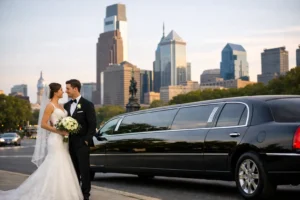
For executive hospitality or a celebratory corporate event, a stretch limousine or Mercedes-Benz Sprinter limousine can provide added room and a more distinctive experience. These vehicles are particularly well suited to client entertainment, company celebrations, and group evenings where parking and designated-driver concerns should not fall on attendees.
Fixed Pricing Supports Better Travel Decisions
Corporate travel budgets are easier to manage when the transportation rate is confirmed in advance. Fixed, all-inclusive pricing removes the uncertainty of surge rates and last-minute fare changes that can occur with on-demand transportation. It also helps executive assistants and office managers reconcile travel arrangements without sorting through variable charges after the fact.
Price should not be the only consideration, though. The lowest quoted ride can become expensive if a driver cancels, arrives in an unsuitable vehicle, lacks airport knowledge, or cannot support a schedule change. Value comes from dependable execution: a professionally maintained vehicle, a trained chauffeur, clear communication, and an operator that takes responsibility for the reservation.
When comparing providers, ask whether the quote includes the expected route, tolls, waiting time policies, and airport procedures. Confirm the vehicle class and passenger capacity. If the itinerary includes several stops or a return pickup, provide those details upfront so the service can plan accurately rather than making assumptions.
A Chauffeur Service Should Protect the Schedule
The best corporate transportation arrangements are built around the day, not just a single pickup. A chauffeur can remain available for an executive moving between meetings, wait during a dinner or event, or manage a multi-stop itinerary across Center City, University City, the Navy Yard, the Main Line, South Jersey, or Princeton.
This is particularly useful when parking is limited, guests are unfamiliar with Philadelphia, or the schedule is likely to shift. Instead of arranging a new car at every stop, the traveler has a consistent point of contact and a vehicle ready when the meeting ends. For a visiting executive, that continuity can make a full day of appointments significantly less demanding.
Safety supports that consistency. Daily vehicle inspections, professional chauffeur standards, and a reservation-based operating model help reduce avoidable surprises. Pre-scheduled service cannot prevent every traffic delay or weather event, but it gives the transportation team the information and authority to respond before a small disruption becomes a missed commitment.
How to Book Corporate Transportation With Fewer Gaps
A detailed reservation is the foundation of a dependable trip. Provide the exact pickup and destination addresses, the preferred pickup time, the number of passengers, luggage expectations, and all flight details. For guest travel, share the traveler’s mobile number only when appropriate and designate the company contact who can approve changes.
For recurring executive travel, consistency is valuable. Keeping preferred vehicle types, frequent routes, billing requirements, and traveler notes on file reduces repeat coordination and creates a more dependable experience over time. Peters Transit can arrange airport transfers, point-to-point executive service, and group transportation with the same attention to confirmed timing and passenger comfort.
If the itinerary matters, reserve transportation before the day becomes busy. A chauffeur service is most effective when it has time to assign the right vehicle, review the route, monitor the flight, and confirm the pickup plan. That preparation gives your travelers something increasingly rare in a packed business schedule: a ride they do not need to think about.