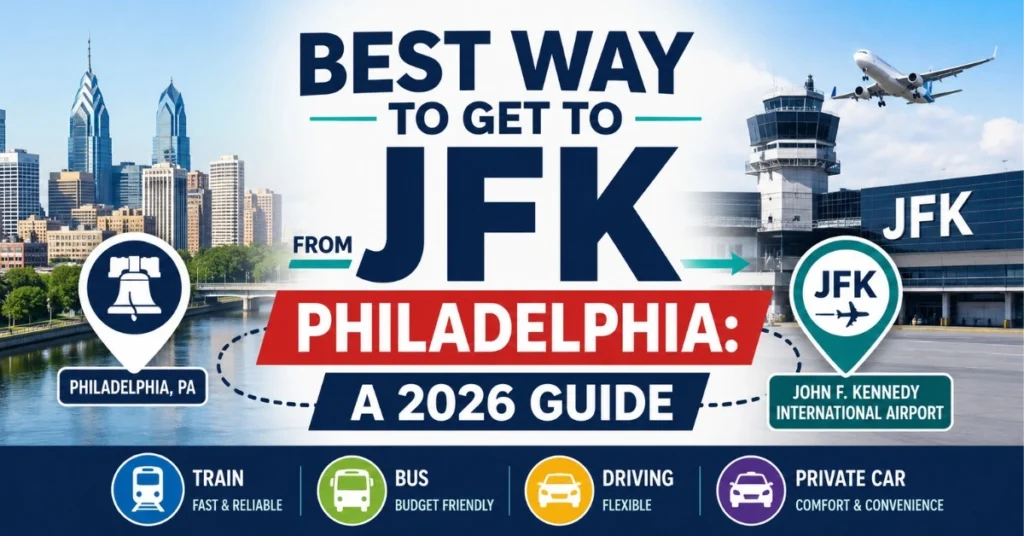
The best way to get to JFK from Philadelphia depends on your budget, schedule, and luggage. Amtrak offers the best balance of speed and reliability, while a private car service provides the easiest door-to-door travel. Buses cost less but usually take the longest.
Introduction
Traveling from Philadelphia to John F. Kennedy International Airport (JFK) is not as simple as driving to your local airport. The trip covers about 100 to 115 miles, and choosing the wrong transportation can lead to missed connections, unexpected costs, or unnecessary stress.
One of the biggest challenges is reaching JFK on time. Roads leading into New York City often become congested, especially during weekday rush hours, weekends, and holidays. Public transportation can also involve several transfers before you arrive at the airport. If you are traveling with children, multiple suitcases, or a tight flight schedule, every transfer adds more time and effort.
The best transportation option depends on what matters most to you. Some travelers want the fastest route. Others want the lowest fare or the most convenient door-to-door service. There is no single answer that works for everyone.
This guide compares every major way to travel from Philadelphia to JFK Airport. You’ll see how each option performs for travel time, cost, reliability, luggage handling, and convenience. By the end, you’ll know which choice fits your travel plans.
Quick Comparison: Which Transportation Option Is Best?
The table below gives a quick overview of the most common ways to travel between Philadelphia and JFK Airport.
| Transportation Method | Average Travel Time | Estimated Cost* | Transfers | Best For |
| Amtrak + AirTrain JFK | 2.5–3.5 hours | $40–$150+ | Yes | Fast and reliable public transportation |
| Bus + Subway + AirTrain | 3.5–5.5 hours | $20–$60 | Yes | Budget travelers |
| Driving | 2.5–4.5 hours | Fuel, tolls, parking | No | Flexible schedules |
| Rental Car | 3–5 hours | Rental, fuel, tolls | No | Travelers returning vehicles in New York |
| Uber or Lyft | 2.5–4.5 hours | $180–$350+ | No | Door-to-door convenience |
| Private Car Service | 2–3 hours | Fixed fare varies by provider | No | Families, business travelers, groups |
*Prices vary depending on travel dates, booking time, and traffic conditions.
Best Choice by Traveler Type
Different travelers have different priorities. Here is a simple guide to help you choose.
| Traveler Type | Recommended Transportation |
| Business travelers | Private Car Service |
| Families with children | Private Car Service |
| Solo travelers | Amtrak + AirTrain |
| Students | Bus + Subway + AirTrain |
| Large groups | Private Car Service |
| Travelers with heavy luggage | Private Car Service |
| Early morning flights | Private Car Service or Amtrak |
| Late-night arrivals | Private Car Service |
| International travelers | Amtrak or Private Car Service |
If you value reliability over price, Amtrak usually offers the best public transportation option because it avoids most highway traffic. If convenience matters more than cost, a private car service removes the need for multiple transfers and luggage handling.
Transportation Options Explained
Amtrak + AirTrain JFK: Best for Speed and Reliability
For many travelers, Amtrak from Philadelphia to JFK offers the best balance between speed and dependability.
The journey starts at 30th Street Station in Philadelphia. From there, Amtrak trains travel to Moynihan Train Hall at New York Penn Station. After arriving, you’ll take the subway to Jamaica Station, where you can board the AirTrain JFK to your airline terminal.
Typical Route
- 30th Street Station
- Moynihan Train Hall
- Penn Station subway connection
- Jamaica Station
- AirTrain JFK
- JFK Airport terminal
Average Travel Time
The complete trip usually takes 2.5 to 3.5 hours, depending on train schedules and transfer times.
Morning departures often move more smoothly because highway congestion has little effect on train travel. However, delays can happen if you miss a subway connection or if maintenance affects rail service.
Typical Ticket Prices
Amtrak fares change based on demand.
- Early bookings often start around $20–$40.
- Last-minute tickets may exceed $100.
- AirTrain JFK requires a separate fare.
Booking several weeks ahead usually provides the lowest prices.
How the Transfer Works
The transfer process is straightforward once you understand the route.
After arriving at Moynihan Train Hall, follow the signs toward the subway. Take the appropriate train toward Jamaica Station, then transfer to the AirTrain JFK, which serves every passenger terminal.
Allow extra time if you have large luggage because you’ll move through several stations.
Advantages
- Reliable departure schedules
- Less affected by I-95 traffic
- Comfortable seating
- Restrooms available onboard
- Good option for solo travelers and business passengers
Drawbacks
- Several transfers before reaching JFK
- Separate tickets for different parts of the trip
- Carrying luggage through stations can be tiring
- Late-night train schedules may be limited
When Amtrak Is the Best Choice
Amtrak works best when:
- You want dependable travel times.
- You’re traveling alone or with one suitcase.
- You prefer avoiding New York highway traffic.
- You book tickets early to save money.
For many travelers comparing Philadelphia to JFK transportation, this option provides the best mix of travel time, comfort, and reliability.
Bus + Subway + AirTrain: Best Budget Option
If keeping costs low is your top priority, traveling by bus offers the cheapest way to reach JFK from Philadelphia.
Several companies operate daily service between Philadelphia and New York City, including Greyhound, FlixBus, and, on some routes, Megabus. Most buses arrive at the Port Authority Bus Terminal in Manhattan.
From there, you’ll take the subway to Jamaica Station before transferring to the AirTrain JFK.
Typical Route
- Philadelphia Bus Station
- Port Authority Bus Terminal
- New York City Subway
- Jamaica Station
- AirTrain JFK
- JFK Airport terminal
Average Travel Time
Expect the journey to take 3.5 to 5.5 hours.
Travel time varies more than train service because buses share the same highways as other vehicles. Heavy traffic entering New York City can add significant delays.
Typical Cost
Bus tickets usually range between $15 and $40 when booked in advance.
Even after adding subway and AirTrain fares, buses remain one of the lowest-cost ways to travel between Philadelphia and JFK.
What to Expect During Transfers
Unlike Amtrak, bus travelers often walk through crowded terminals before finding the correct subway entrance.
If you’re carrying several bags, moving through stations and subway platforms may require extra effort.
Advantages
- Lowest transportation cost
- Frequent departures throughout the day
- Good choice for students and budget travelers
- Bookings often include discounted fares
Drawbacks
- Longer travel times
- Traffic delays are common
- Multiple transfers
- Less luggage space than private transportation
- Standing during subway transfers may be necessary
When Bus Travel Makes Sense
Choose the bus if:
- Saving money matters more than saving time.
- Your flight schedule has flexibility.
- You travel light.
- You don’t mind making several transfers.
For travelers searching for the cheapest way to get from Philadelphia to JFK Airport, the combination of bus, subway, and AirTrain usually provides the lowest overall transportation cost.
Driving Yourself or Renting a Car: Best for Flexible Schedules
Driving gives you complete control over your departure time and route. It works well if you plan to make stops along the way or are traveling with family. However, flexibility comes with added costs and the risk of heavy traffic near New York City.
A typical route from Philadelphia to JFK Airport follows I-95 North, continues on the New Jersey Turnpike, and then connects to the Belt Parkway toward the airport.
Average Travel Time
Under normal conditions, driving takes 2.5 to 3 hours.
During weekday rush hour, holiday weekends, or bad weather, the same trip can take 4 hours or longer.
Costs to Consider
Driving costs more than fuel alone. You should also include:
- Fuel expenses
- Highway tolls
- Airport parking fees for keeping your vehicle at JFK
- Vehicle wear and maintenance
If you’re renting a car, remember that many rental companies charge a one-way drop-off fee when returning the vehicle at a different location.
Parking at JFK
JFK offers both short-term and long-term parking. Parking close to the terminals costs more, while economy lots require an AirTrain ride to the terminal.
If your trip lasts several days, parking charges can quickly become one of your biggest travel expenses.
Traffic Challenges
Road traffic is the biggest disadvantage of driving.
Common congestion points include:
- I-95 approaching New Jersey
- New Jersey Turnpike toll plazas
- Belt Parkway
- Van Wyck Expressway near JFK
Navigation apps can suggest alternate routes, but delays are common during peak travel times.
Advantages
- Leave whenever you choose
- No transfers between trains or buses
- Easier with children or bulky luggage
- Convenient if visiting several locations before your flight
Drawbacks
- Heavy traffic can cause major delays
- Fuel, tolls, and parking increase the total cost
- Driving in New York City can be stressful
- One-way rental fees may be expensive
When Driving Is the Best Choice
Driving works well if:
- Your schedule is flexible.
- You’re traveling with your family.
- You need space for several bags.
- You’re visiting places before arriving at JFK.
Uber, Lyft & Private Car Services: Best for Convenience and Door-to-Door Travel
If you want to avoid train stations, bus terminals, and parking lots, a door-to-door ride is the easiest solution. Both rideshare services and professional airport transportation provide direct travel from Philadelphia to JFK Airport, but they work differently.
Uber and Lyft
Uber and Lyft let you request a ride through a mobile app. Prices depend on demand, distance, traffic, and the type of vehicle you choose.
During busy travel periods, fares often increase because of surge pricing.
Private Car Services
Peters Transit is usually booked before your travel day. Many companies provide fixed pricing, flight tracking, and direct pickup from your home, hotel, or office.
Unlike rideshare services, professional drivers typically monitor your schedule and adjust for traffic or flight changes when airport pickup is included.
Uber vs. Private Car Service
| Feature | Uber / Lyft | Private Car Service |
| Fixed Pricing | Usually No | Usually Yes |
| Surge Pricing | Yes | No (pre-booked fare) |
| Flight Monitoring | Limited | Yes |
| Meet and Greet | Rare | Often Available |
| Professional Chauffeur | No | Yes |
| Luggage Assistance | Varies | Usually Included |
| Vehicle Choices | Standard selection | Sedans, SUVs, Vans, Luxury Vehicles |
Travel Time
Both options usually take 2.5 to 4 hours, depending on traffic conditions.
Because they use the same highways as personal vehicles, road congestion affects both equally.
When Uber Makes Sense
Uber or Lyft may be suitable if:
- You’re booking at the last minute.
- You’re traveling alone.
- Demand is low, and surge pricing is not active.
When a Private Car Service Is Better
A private car service is often the better choice for:
- Business travelers
- Families with children
- International travelers
- Travelers carrying several suitcases
- Groups sharing transportation costs
With larger vehicles available, groups can often split the fare, making the cost per person more reasonable.
Cost Comparison
Which Option Saves the Most Money?
Transportation costs vary depending on when you book, travel demand, and traffic. Looking only at the ticket price can be misleading because some options include extra expenses that travelers often overlook.
| Option | Typical Cost | Hidden Costs |
| Train | $40–$150+ | AirTrain fare, last-minute ticket prices |
| Bus | $20–$60 | Subway fare, AirTrain fare |
| Driving | Fuel + tolls + parking | Parking fees, vehicle wear |
| Uber/Lyft | $180–$350+ | Surge pricing, higher demand pricing |
| Private Car Service | Fixed fare varies | No surprise charges when booked in advance |
What Adds to the Total Cost?
Some expenses are easy to miss when planning your trip.
Parking
Leaving your vehicle at JFK for several days can cost more than expected, especially in terminal parking lots.
Highway Tolls
Routes through New Jersey and New York include toll roads. These charges should be part of your travel budget.
Fuel
Long-distance driving increases fuel costs, especially during periods of heavy traffic.
Surge Pricing
Uber and Lyft prices can rise quickly during:
- Morning rush hour
- Evening rush hour
- Holidays
- Bad weather
- Major events in New York City
Rental Fees
Rental companies may charge extra for:
- One-way returns
- Additional drivers
- Fuel replacement
- Insurance coverage
Booking Early
Reservations often reduce costs for:
- Amtrak
- Bus tickets
- Private airport transportation
Waiting until the last minute usually limits your options and increases prices.
How Early Should You Leave for JFK?
Leaving at the right time is just as important as choosing the right transportation.
Domestic Flights
Plan to arrive at JFK at least two hours before departure.
If you’re traveling from Philadelphia, allow enough time for transportation plus airport security.
International Flights
International travelers should aim to arrive three hours before departure.
When traveling from Philadelphia, building in extra travel time reduces the risk of missing check-in or baggage deadlines.
Peak Holiday Travel
During Thanksgiving, Christmas, New Year, and other busy periods, allow at least one additional hour for highway traffic and crowded terminals.
Morning Flights
Early flights often require leaving Philadelphia before sunrise.
If public transportation schedules are limited, a private car service may provide a more reliable departure.
Evening Flights
Afternoon departures from Philadelphia often coincide with evening rush hour near New York City.
Leaving earlier than planned helps avoid delays caused by traffic on I-95, the New Jersey Turnpike, and roads approaching JFK Airport.
For most international flights, many experienced travelers build about a four-hour transportation buffer between leaving Philadelphia and airline check-in. This extra time helps absorb traffic delays, transfer times, or unexpected disruptions without creating unnecessary stress.
Frequently Asked Questions
What is the best way to get to JFK from Philadelphia?
For most travelers, Amtrak plus AirTrain JFK offers the best balance of travel time, reliability, and cost. If you want door-to-door convenience or are traveling with children or several suitcases, a private car service is often the easier choice.
Is there a direct train from Philadelphia to JFK?
No. There is no direct train to JFK Airport. Most rail trips require traveling from 30th Street Station to Moynihan Train Hall, taking the subway to Jamaica Station, and then boarding the AirTrain JFK.
What is the cheapest way to travel from Philadelphia to JFK?
The lowest-cost option is usually a bus, followed by the subway and AirTrain. Booking bus tickets early often helps reduce the total fare.
Which transportation option is best for families?
Families usually benefit from a private car service because it provides direct transportation and eliminates the need to move luggage and children between train stations and subway platforms.
Conclusion
The best way to get to JFK from Philadelphia depends on how you balance time, cost, and convenience.
If you want the best overall public transportation option, Amtrak, combined with AirTrain JFK, provides a reliable trip with predictable travel times.
If keeping costs low is your priority, the bus, subway, and AirTrain route usually offers the cheapest way to reach JFK, although it requires more transfers and a longer journey.
If your schedule may change or you need to make stops along the way, driving or renting a car gives you the most flexibility. Just remember to budget for fuel, tolls, parking, and possible traffic delays.
For families, business travelers, international passengers, or anyone carrying several suitcases, a private car service offers the simplest door-to-door experience without the hassle of changing trains or navigating busy stations.
Whichever option you choose, book tickets or transportation in advance whenever possible. Early planning often lowers costs, gives you more scheduling choices, and provides extra time to handle traffic, weather, or unexpected delays before your flight.